
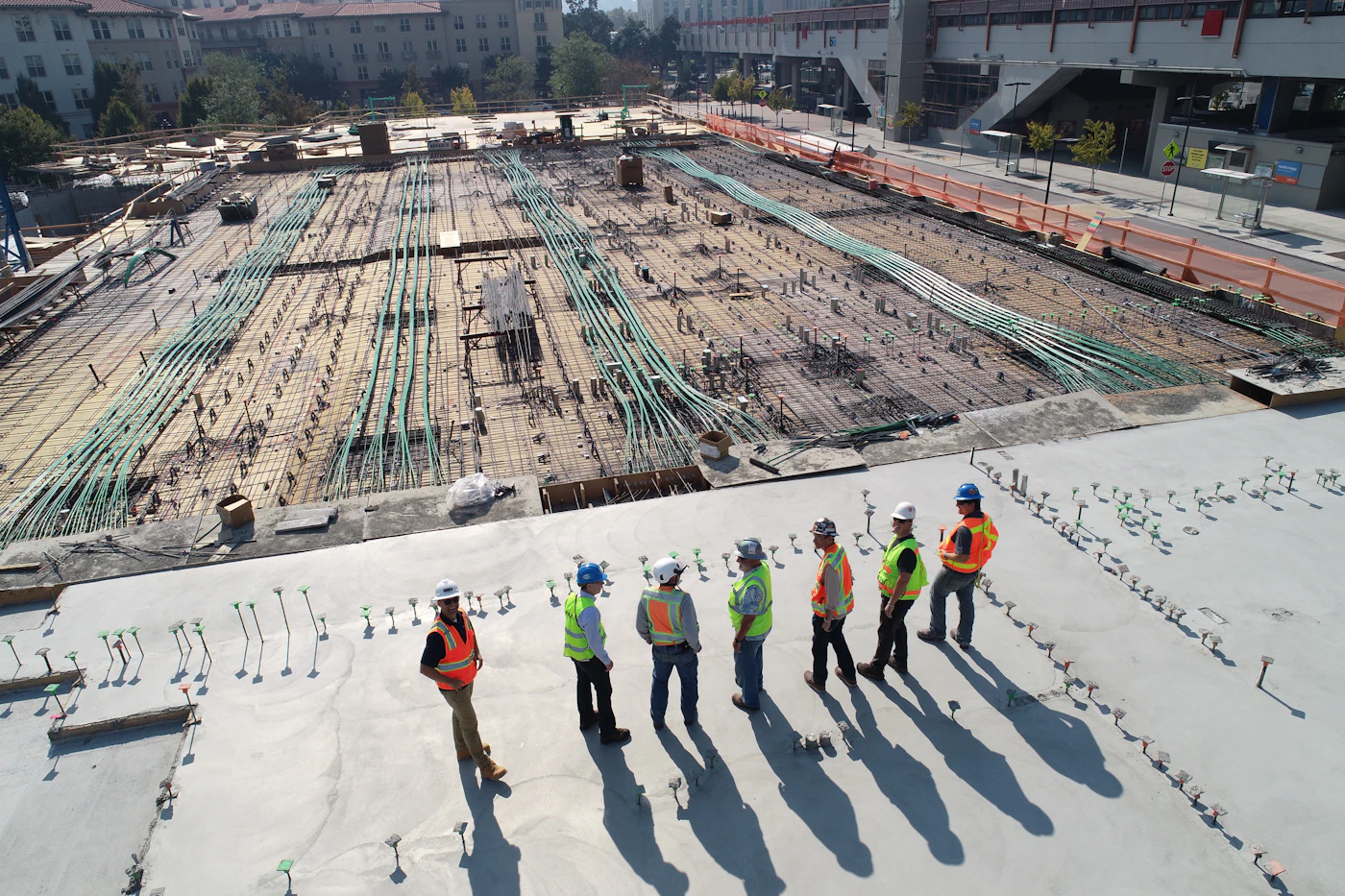
Why Ground Movement Monitoring Matters During Construction
Construction activities can change the behaviour of the surrounding ground. Excavation, tunnelling, dewatering, piling, underground utilities, and major earthworks can all influence ground conditions.
Ground movement monitoring provides engineers with measurements that help establish how the surrounding environment responds during different construction stages.
What Is Ground Movement?
Ground movement may include settlement, heave, lateral displacement, or other forms of deformation. The magnitude and direction of movement depend on site geology, groundwater conditions, excavation geometry, construction methods, and surrounding loads.
What Can Be Monitored?
- Surface settlement
- Vertical displacement
- Lateral movement
- Building movement
- Road and pavement deformation
- Movement around excavations
Monitoring Near Existing Structures
Where construction takes place close to existing buildings or infrastructure, monitoring can provide an additional layer of information about how nearby assets are responding to construction activities.
Data and Trend Analysis
Single measurements provide limited information. A monitoring programme becomes more valuable when readings are collected consistently and analysed as trends over time.
Engineers can compare movement against construction stages, excavation progress, groundwater conditions, and other project events.
Conclusion
Ground movement monitoring is an important part of managing construction risks where excavation and ground disturbance may affect surrounding assets.
Talk to Falcon Geo-Monitoring about your ground monitoring requirements.